


Cockapoos are sociable, adaptable, and generally up for anything — except, for many of them, the car. Here's why they struggle and what actually helps.
Cockapoos are one of the most popular breeds in the UK, and for good reason. They're intelligent, affectionate, and thrive on being close to their owners. They go everywhere with you — which is exactly why car travel becomes such a frustrating problem when it doesn't work.
Because here's the thing about Cockapoos: they want to be with you. They want to come on the adventure. But something about the car makes many of them anxious, sick, or both — and the breed traits that make them such brilliant companions are often the same traits that make car travel harder.
Understanding why Cockapoos specifically struggle — and what to do about it — is different from generic dog travel advice. This guide is written for Cockapoo owners who've already tried the obvious things and need something that actually works.
Why Cockapoos Struggle in the Car
Not every Cockapoo has car problems. But enough of them do that it's clearly not random. Several breed-specific traits converge to make car travel particularly challenging.
Sensitivity to Sensory Input
Both Poodles and Cocker Spaniels are highly sensitive breeds — attuned to sounds, movement, and environmental change. Cockapoos inherit this sensitivity in varying degrees, and the car is an overwhelming sensory environment: engine vibration, road noise, passing traffic, visual blur through the windows, and constant physical forces acting on their body.
A less sensitive breed might tune most of this out. A Cockapoo processes it all. The result is overstimulation that presents as anxiety — panting, whining, inability to settle, hypervigilance.
Separation Anxiety Crossover
Cockapoos are prone to separation anxiety, and car travel can trigger a version of it even when you're sitting two feet away. If your Cockapoo can see you but can't reach you — which is the reality in most car setups — they experience a form of proximity frustration that mimics separation distress. They whine, pace, and try to climb towards you, not because of the car itself, but because the setup prevents them from doing what their instinct demands: being right next to you.
Physical Size and Instability
Most Cockapoos weigh between 5 and 12kg, placing them in a size range where standard car setups work poorly. They're too big for a lap (and having them on your lap while driving is illegal), too small to brace effectively on a flat back seat, and too light to stay stable without active support during cornering and braking.
A 7kg Cockapoo on a flat back seat is essentially surfing every roundabout and braking event. They compensate by bracing with all four legs, which is physically exhausting and — over the course of even a short journey — builds into visible stress.
Motion Sickness Susceptibility
The Poodle side contributes a tendency towards motion sensitivity. Combined with the physical instability described above, many Cockapoos develop motion sickness that then creates a layered anxiety response: they feel sick, they learn the car means feeling sick, and the anxiety starts before the car even moves.
What Doesn't Work (And Why You've Probably Tried It)
Having Them on Your Lap
Aside from being illegal under the Highway Code (Rule 57), this teaches your Cockapoo that they should be on you during travel. When you eventually need to restrain them — for safety, for a longer journey, for any reason — the transition is harder because you've set an expectation you can't sustain.
Letting Them Roam the Back Seat
An unrestrained Cockapoo on the back seat slides with every turn, falls with every brake, and spends the entire journey physically compensating for forces they can't predict. This is the number one cause of car anxiety in Cockapoos, and it's the most common setup. The correlation isn't a coincidence.
A Harness Clipped to the Seatbelt
This keeps them roughly in one area but provides no body support. Your Cockapoo still swings laterally with every turn, still lurches forward with every brake, and now has the added frustration of being tethered without being comfortable. Many Cockapoos respond to harness-only setups by escalating their distress — because they can't move freely and they can't settle. It's the worst of both options.
Treats and Distraction
Treats can support a structured desensitisation plan, but throwing treats at an anxious Cockapoo mid-journey doesn't address the cause. If your dog is too stressed to eat — which is common with genuinely anxious Cockapoos — the treats become irrelevant. And lick mats, while popular, lose their appeal quickly when the dog is physically uncomfortable.
What Actually Works
Get the Physical Setup Right First
This is where most Cockapoo owners see the biggest shift, and it's the step that generic travel advice underplays.
A Cockapoo needs three things in a car setup: body support against lateral and longitudinal forces (so they're not bracing through every corner and brake), elevation to see out (which aligns their visual input with their vestibular input, reducing nausea), and an enclosed, den-like space that satisfies their need for proximity without requiring your lap.
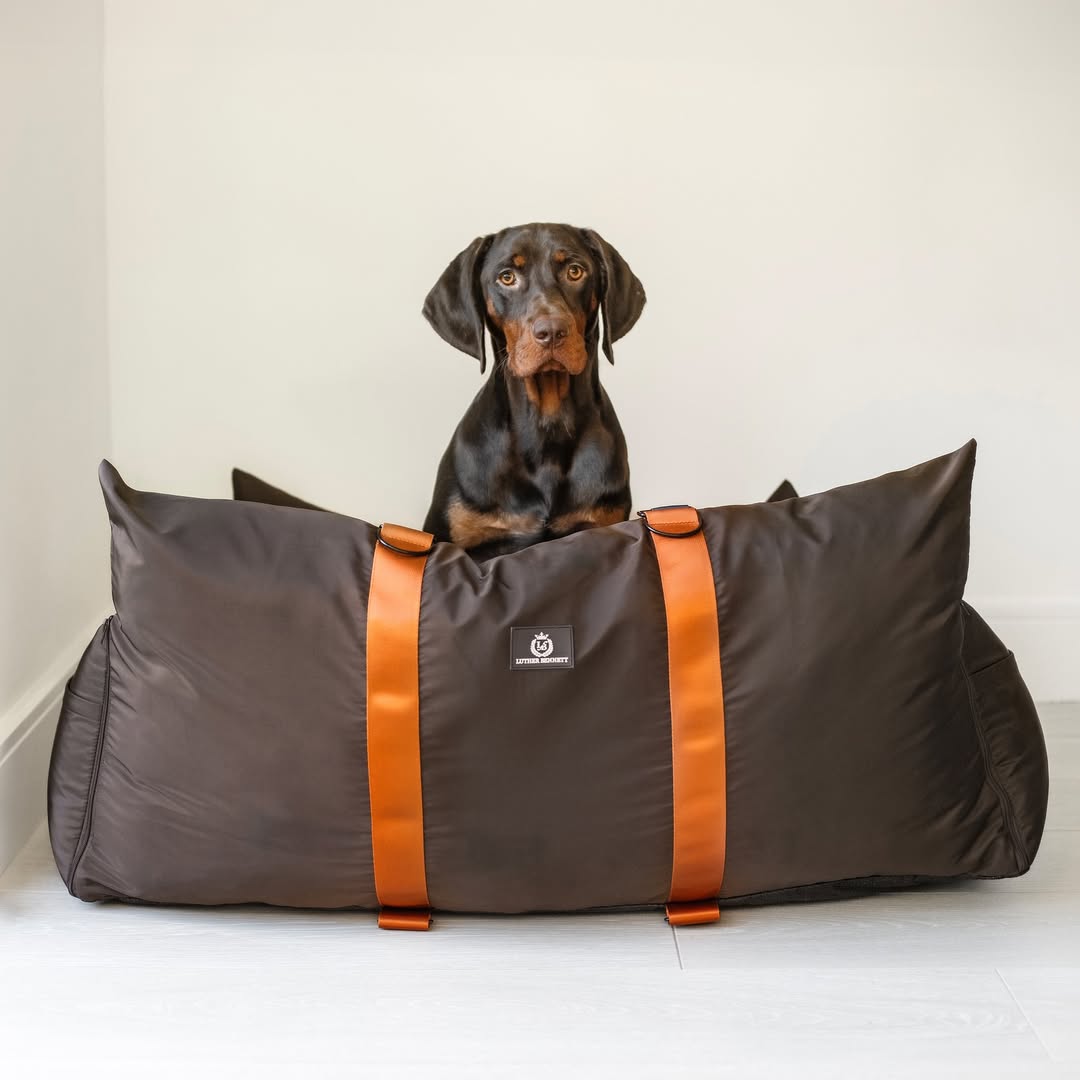
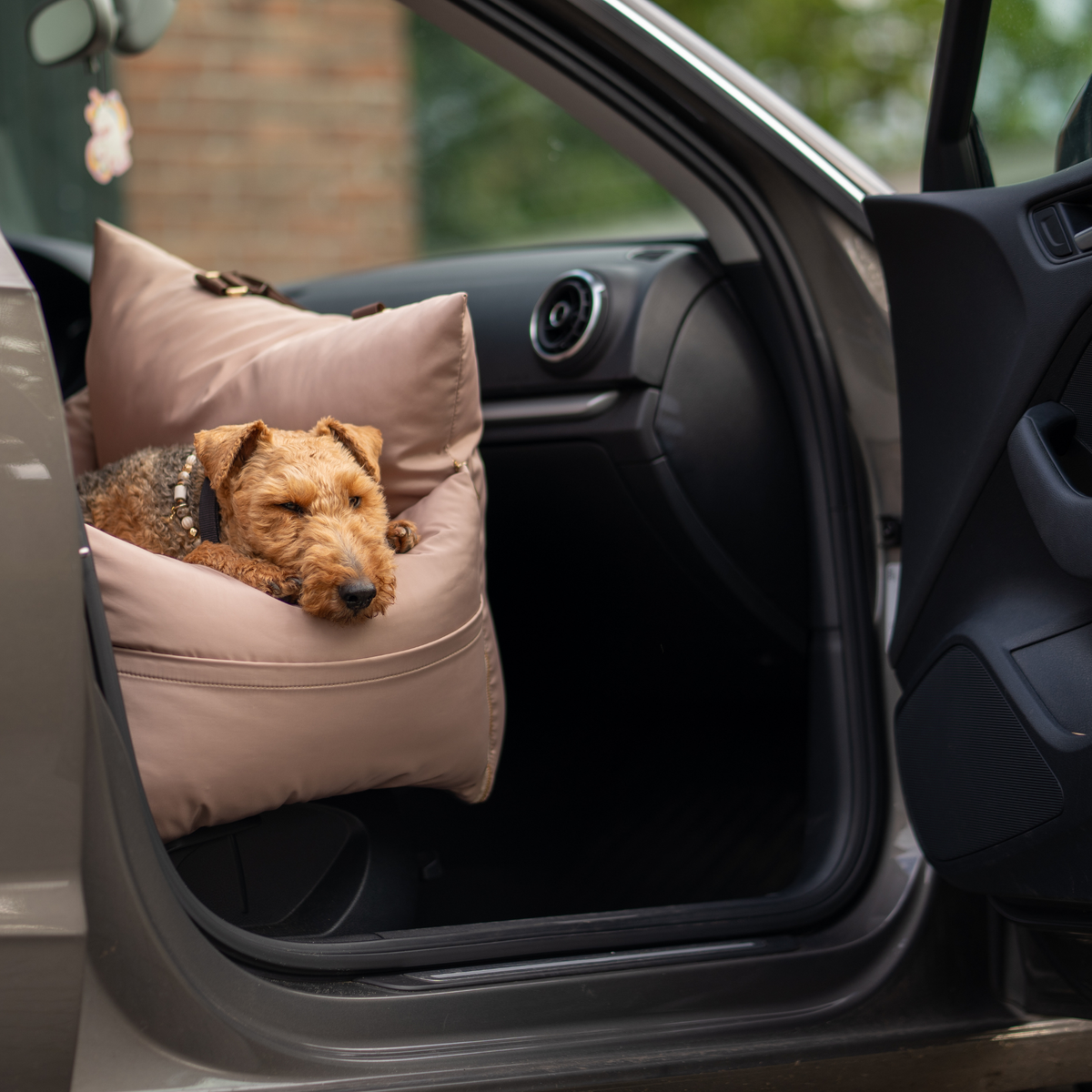
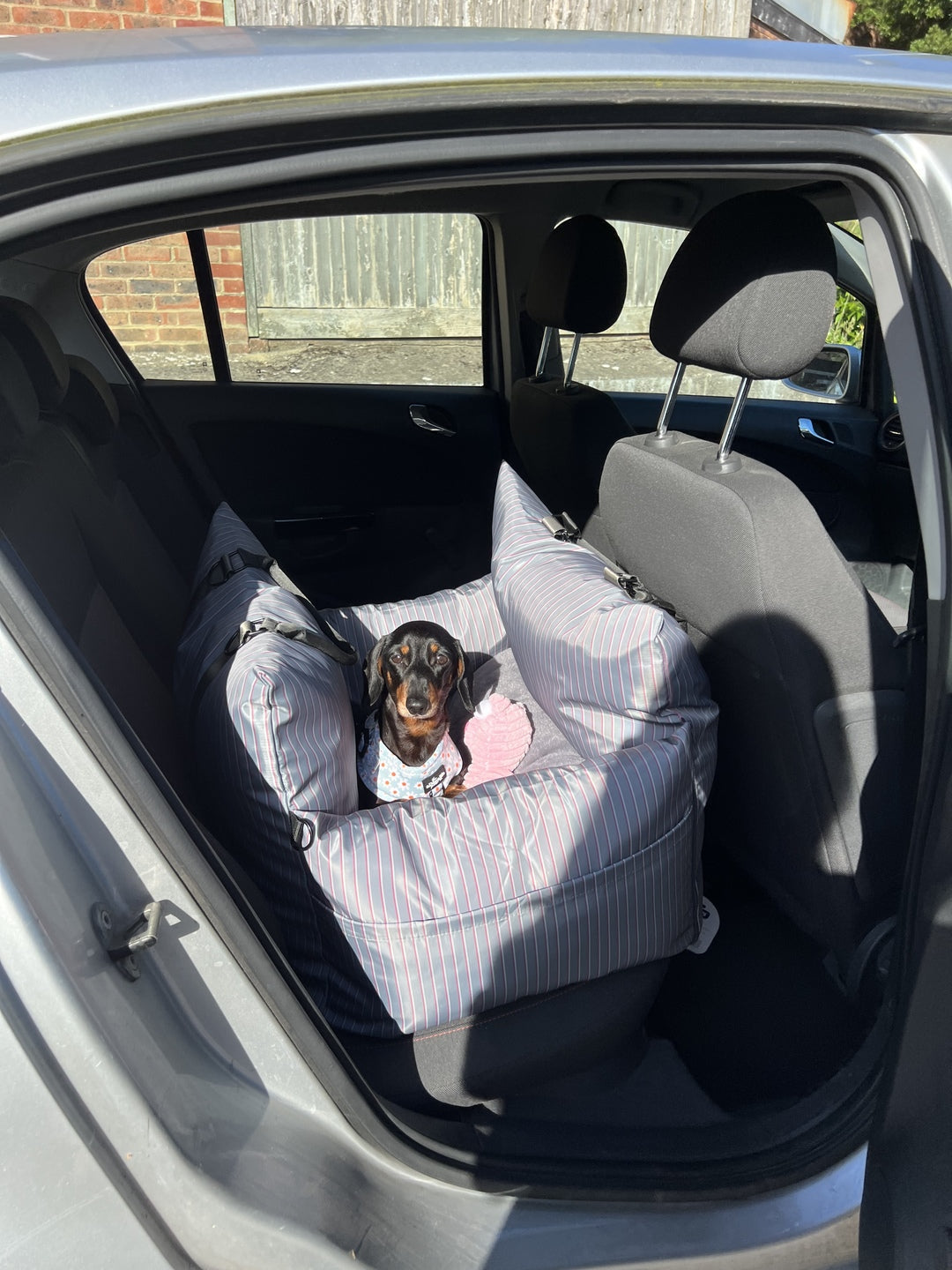
The Dog Pod was designed around exactly this combination. It sits elevated on the back seat, enclosed on all sides with padded walls, and secured via ISOFIX or seatbelt to the car's structure. For a Cockapoo, this creates something close to being held — they're contained, supported, and high enough to see you and the road. Their body stays still while the car moves around them.
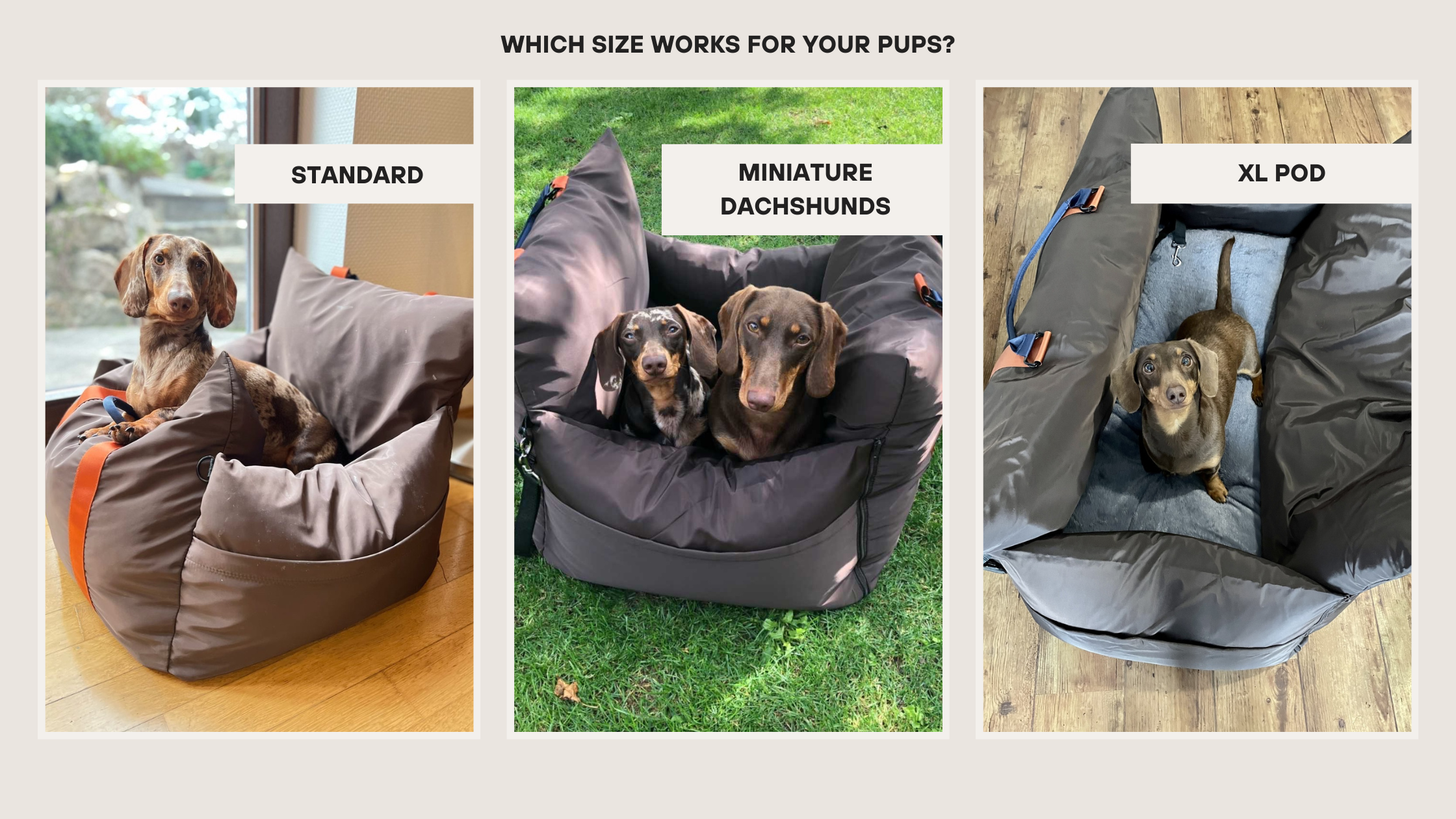
The size range is particularly well-suited to Cockapoos. Whether yours is a compact 5kg miniature or a sturdier 12kg standard, the Dog Pod's dimensions provide the snug, den-like fit that this breed responds to. Too much space and they move around; too little and they can't settle. The Dog Pod hits the range that works.
Desensitise Systematically
Once the physical setup is right, build positive associations in stages. Cockapoos are intelligent and respond well to structured training — but they're also sensitive enough to regress quickly if you push too fast.
Days 1-3: Let your Cockapoo explore the car seat at home, off the car. Place it on the floor with treats inside. Let them climb in and out on their own terms. The goal is positive association with the object itself.
Days 4-7: Place the seat in the car, engine off. Sit with your Cockapoo while they settle in it. Five minutes, then out. Keep it short and positive.
Week 2: Engine on, car stationary. Same calm routine. If your Cockapoo settles, reward the calm. If they stress, go back to engine off.
Week 2-3: Short drives — literally two to three minutes — to somewhere pleasant. A park. A friend's house. A quiet field. The destination matters enormously for Cockapoos because they're so reward-motivated.
Week 3-4: Gradually extend drive time. Watch for regression and respect it. A Cockapoo who was fine at 10 minutes but stressed at 15 isn't being difficult — they're telling you where the boundary currently sits.
Use Their Bond With You
Cockapoos are uniquely responsive to your emotional state. If you're tense, hurried, or anxious about the car journey, they will mirror it. The calmest Cockapoo car journeys start before you get in the vehicle: slow, calm movements, quiet voice, no rush.
Position them where they can see you. A back-seat setup with a clear sightline to the driver's seat is significantly calmer for a Cockapoo than a boot setup where they can't see you at all. This is one of the reasons elevation works so well for this breed — raised up, they can see your head and shoulders from the back seat, which provides the visual reassurance they need.
Calming Aids That Work for Cockapoos
Adaptil spray: Applied to the car seat 15 minutes before travel. Cockapoos generally respond well to pheromone-based calming products, likely due to their sensitivity.
A worn t-shirt of yours in the car seat: This sounds simple because it is. Your scent is the most powerful calming tool you have with a Cockapoo. A recently worn item in their travel space provides continuous olfactory reassurance.
Classical music, low volume: Research supports this for dogs generally, and the heightened sensitivity of Cockapoos makes them particularly responsive to auditory environment.
The Cockapoo-Specific Journey Checklist
Before travel: 15-minute walk to burn off excess energy (a wired Cockapoo in the car is harder to settle than a tired one). Feed at least two hours before departure. Apply Adaptil to the car seat. Place a worn item of clothing in the seat.
Getting in: Lead them to the car calmly. Let them enter the seat in their own time — don't lift and place unless they're happy with it. Settle them, close the enclosure if applicable, and give a calm verbal marker ("settle" or "good").
During travel: Drive smoothly. Minimise stops and starts where possible. Keep music low and consistent. Avoid opening windows fully — a crack is enough for ventilation without the overwhelming rush of wind and noise.
After arrival: Let them decompress for a moment before opening the car. A Cockapoo who's been working hard to stay calm needs a beat before transitioning to the excitement of arrival.
When Progress Stalls
If you've addressed the physical setup, followed a desensitisation plan, and your Cockapoo still can't settle after four to six weeks, two things are worth checking.
First, rule out an underlying health issue. Ear infections — which Cockapoos are prone to due to their floppy, hair-filled ears — can significantly worsen motion sensitivity. If your dog has recurring ear problems, this could be the hidden factor.
Second, consider whether the anxiety has a component that predates car travel. Cockapoos with generalised anxiety or separation anxiety often struggle more in the car because the travel stress layers on top of an existing baseline. In these cases, working with a clinical animal behaviourist alongside your vet can address the broader picture.
The Bottom Line
Cockapoos aren't difficult travellers by nature. They're sensitive travellers — which means the wrong setup hits them harder, but the right setup transforms them faster. The breed traits that make car travel challenging (sensitivity, attachment, physical size) are the same traits that make them incredibly responsive to a proper solution.
Most Cockapoo owners who fix the physical setup are surprised by how quickly the anxiety fades. Not weeks of slow progress — often a visible shift within the first few journeys. Because the dog was never anxious about the car. They were anxious about how the car made them feel.
You'll wish you'd found us sooner. Discover what calm looks like →

Share:
Dog Car Sickness vs Anxiety: How to Tell the Difference
Dog Car Seat vs Crate vs Harness: Which Is Safest?