

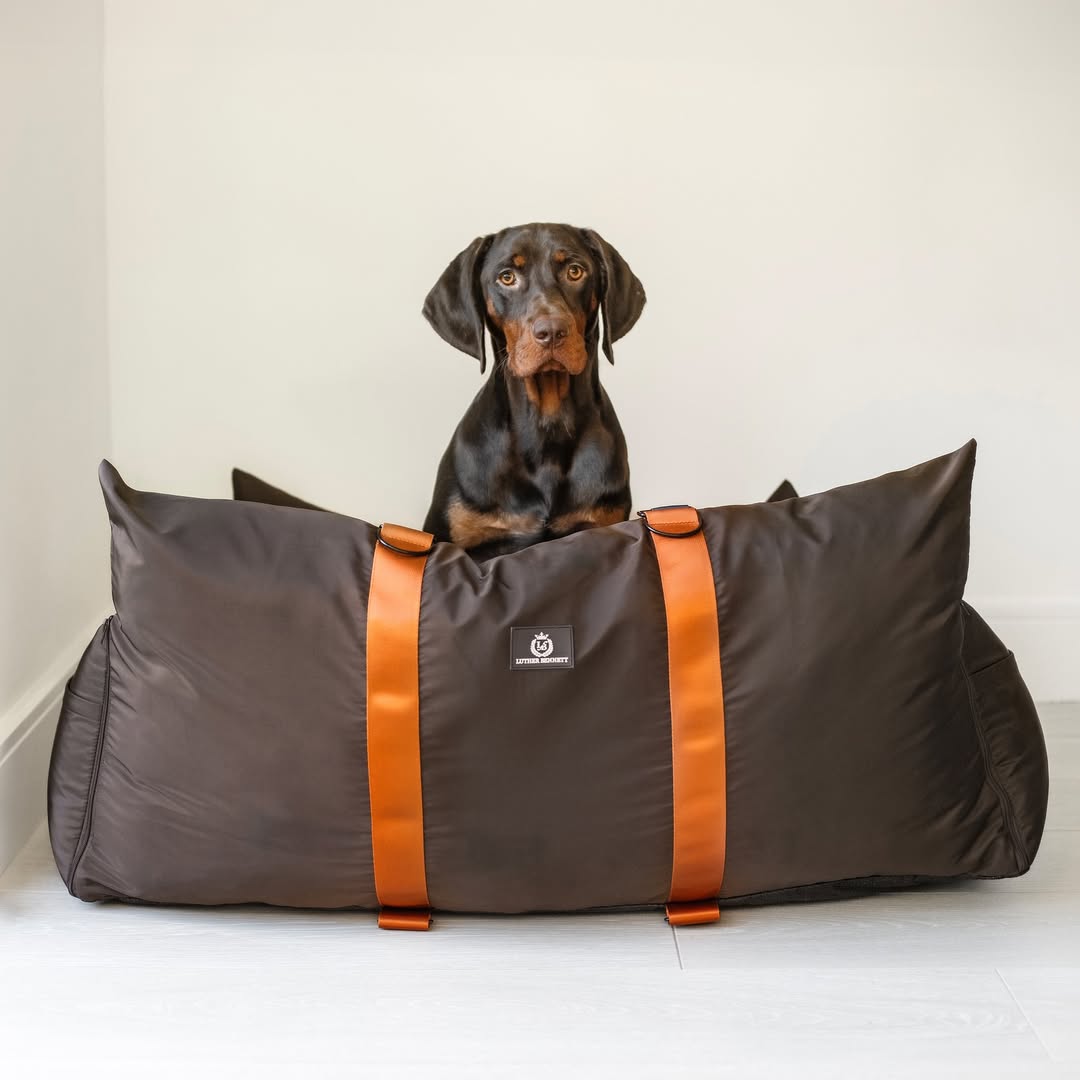
You've got three main options for restraining your dog in the car. Here's an honest breakdown of what each one actually does — and doesn't do — so you can make the right call.
Every dog owner eventually faces this decision. Your dog needs to be restrained in the car — UK law requires it, insurance demands it, and basic physics makes the case impossible to ignore. But the options look very different, and the marketing around each one makes it hard to separate what actually works from what just sounds reassuring.
This isn't a comparison designed to push you towards one product. It's a breakdown of how each restraint type performs against the forces your dog actually faces in a moving car — because that's what matters when the unexpected happens.
The Three Main Options
Before comparing them, it's worth understanding what each one is designed to do.
A dog harness with seatbelt attachment clips your dog to the car's seatbelt system, keeping them tethered to one position on the seat. The harness wraps around their body; the tether connects to the seatbelt buckle.
A crate or carrier encloses your dog in a rigid or semi-rigid container, typically placed in the boot or on the back seat. The crate itself may or may not be secured to the car.
A dog car seat provides an elevated, padded space for your dog to sit or lie in, secured to the car via seatbelt routing or ISOFIX anchor points.
Each claims to keep your dog safe. The reality is more nuanced.
Safety: How Each Option Handles a Crash
This is the question that matters most, and the one where the differences are starkest.
Harness
In a collision, a harness allows your dog to travel forward until the tether reaches full extension. Depending on the harness length and your dog's size, this can mean 30-60cm of forward movement before the tether catches. When it does catch, all the deceleration force concentrates on the attachment point — typically a single clip on the back of the harness.
Most dog harnesses are not crash-tested. The few that have been tested by independent organisations show consistent issues: clips failing at speeds above 25mph, stitching tearing under impact forces, and webbing stretching enough to allow the dog to contact the front seats or the seatback. Even harnesses marketed as "crash-tested" often reference internal testing with limited transparency about methodology.
The fundamental design limitation is that a harness restrains at one point. A human seatbelt works because it distributes force across the chest and lap — two separate anchor points working together. A dog harness is a single tether to a single clip. The physics aren't comparable.
Verdict: A harness prevents your dog from becoming a fully free projectile, but it doesn't provide meaningful crash protection at anything above low speed. It's better than nothing — but the margin is smaller than most people assume.
Crate
A crate's crash performance depends almost entirely on whether it's properly secured.
An unsecured crate is potentially the most dangerous option of the three. In a collision, the crate — with your dog inside it — becomes a heavy, rigid projectile. A typical plastic airline crate weighs 4-6kg empty. Add a 10kg dog and you have 15kg of mass moving at full vehicle speed. If it strikes the back of the front seats, the forces are severe — for the dog inside, for any passengers in front, and for the structural integrity of the crate itself.
A properly secured crate — bolted to the boot floor, strapped to the car's tie-down points, or held in place by a cargo net system rated for the load — performs significantly better. The crate stays in place, and the rigid walls distribute impact forces around your dog rather than concentrating them at a single point. This is the closest thing to a crash-tested enclosure that most owners can access.
The caveat: "properly secured" is a high bar. Ratchet straps to the boot tie-down points, correctly tensioned, with no slack. Most owners use a crate that sits in the boot under its own weight, possibly with a blanket in the bottom. This is not secured. It's placed.
Verdict: A well-secured crate offers genuine crash protection — arguably the best of the three for dogs travelling in the boot. An unsecured crate is dangerous. The gap between the two is enormous.
Dog Car Seat
A purpose-built car seat's crash performance depends on its attachment system.
A car seat that clips to the headrest with a single strap offers almost no crash protection. The headrest attachment keeps the seat on the car seat during normal driving, but under collision forces, the strap will either break or the headrest will flex, allowing the car seat (and your dog) to continue forward.
A car seat with seatbelt routing — where the car's seatbelt threads through a channel in the base — performs better. The seatbelt itself is a load-bearing anchor, and the routing distributes force across the base rather than at a single point.
A car seat with ISOFIX attachment — connecting directly to the car's chassis anchor points — offers the highest level of security available for a back-seat restraint. ISOFIX is the same system used for child car seats, and it eliminates virtually all movement between the seat and the car. The connection is rigid. In a collision, the car seat stays exactly where it is. Your dog decelerates with the vehicle rather than continuing forward.
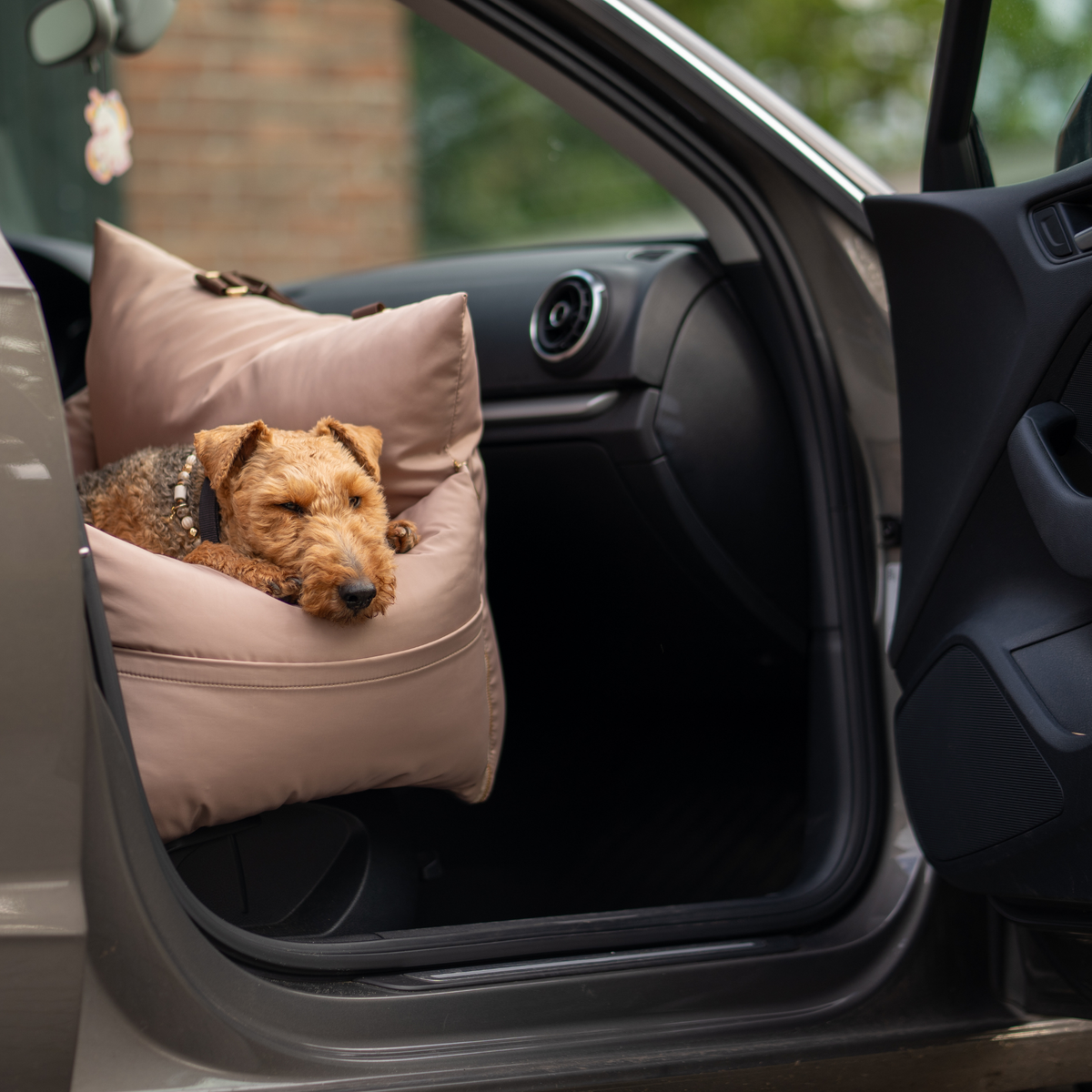
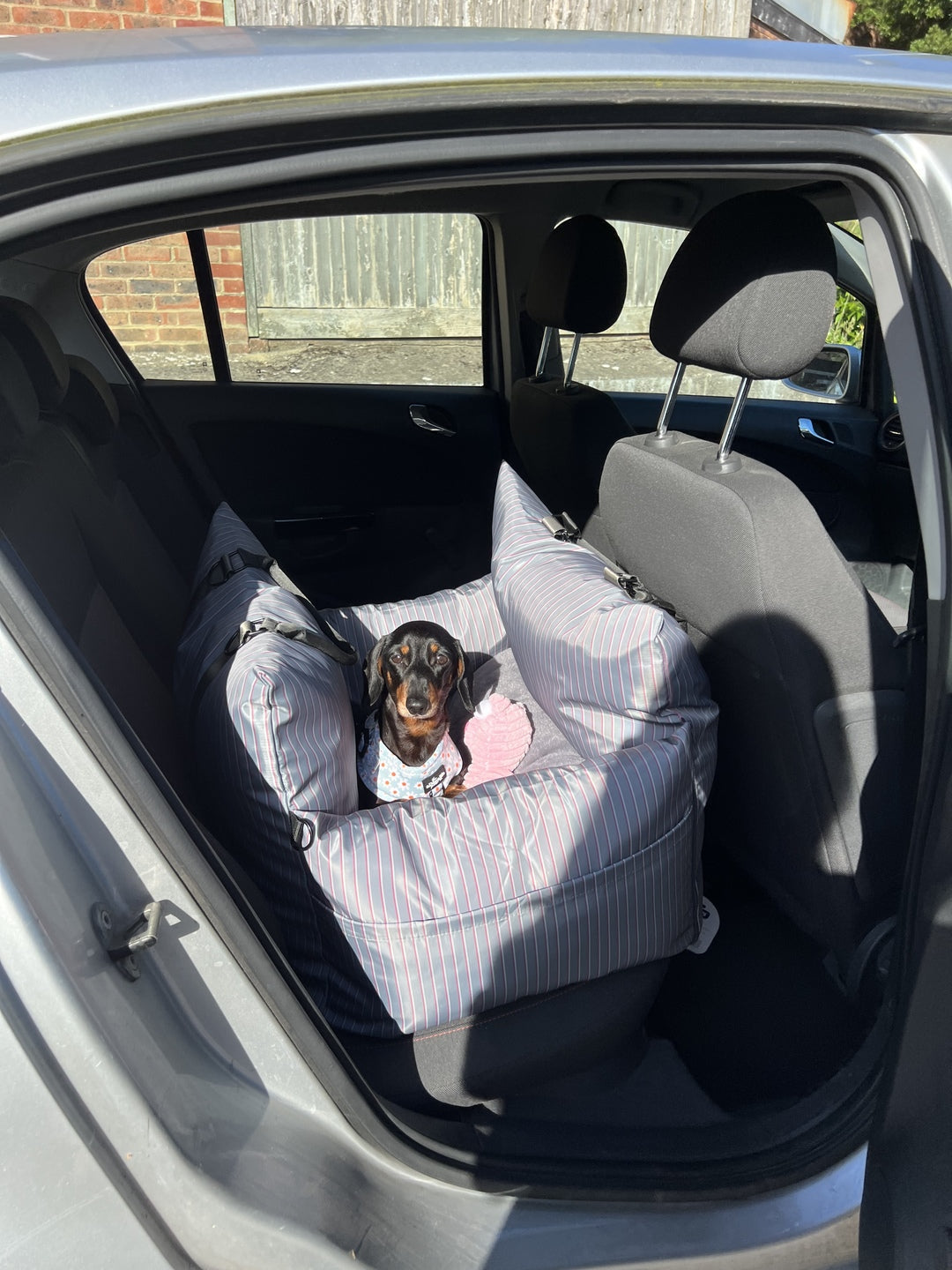
The Dog Pod uses ISOFIX (with seatbelt as a secondary option), combined with padded enclosure walls that prevent ejection and distribute lateral forces. This addresses the crash scenario most restraints fail: the combination of forward deceleration and lateral rotation that occurs in real-world collisions, which are rarely perfectly head-on.
Verdict: Varies dramatically by attachment type. Headrest-only car seats are barely functional as restraints. Seatbelt-routed seats are reasonable. ISOFIX-attached car seats are the safest back-seat option available.
Everyday Comfort: How Each Option Handles Normal Driving
Crash protection matters, but your dog spends 99.9% of car time during normal driving. The restraint that's most comfortable day-to-day is the one your dog will actually tolerate — and the one you'll actually use consistently.
Harness
A harness allows your dog to sit or lie on the seat but provides no body support. During cornering, your dog's body swings laterally. During braking, they lurch forward. During acceleration, they shift back. The harness prevents them from leaving the seat but doesn't prevent the constant micro-movements that make travel physically tiring.
Many dogs respond to harness travel by bracing — standing rigid with all four legs locked to counteract the forces. This is exhausting over even short journeys and is a significant contributor to car anxiety. The dog isn't relaxed; they're working.
Crate
A crate provides enclosure, which many dogs find inherently calming — the den-like space triggers a settling response. However, most crates sit flat in the boot, which means your dog can't see out. For dogs prone to motion sickness, this worsens the vestibular conflict (they feel movement they can't see). For anxious dogs, the isolation from their owner can increase distress rather than reduce it.
Space is also a factor. A properly sized crate allows your dog to stand, turn around, and lie down, but it dominates the boot space in most vehicles. For families who need the boot for luggage, shopping, or other passengers, a full-time crate setup isn't always practical.
Dog Car Seat
A well-designed car seat provides elevation (so your dog can see out), enclosure (so they feel contained and supported), and body support against all directional forces. This combination means your dog can settle naturally rather than bracing. The elevation also reduces motion sickness by aligning visual input with vestibular sensation.
For the dog, the experience is fundamentally different from a harness or crate. They're high enough to see you, the road, and the world passing by. They're contained enough to feel secure. And their body is held steady, so they can actually relax rather than fight the car's movement.
The trade-off is seat space — a car seat occupies one seat position. For single-dog households, this is rarely an issue. For multi-dog households, you may need multiple seats or a combination approach.
Practicality: Setup, Maintenance, and Daily Use
Harness
Quick to put on and remove. No installation required — clip the tether to the seatbelt buckle and go. Easiest to clean (most are machine washable). No significant space when not in use.
The daily reality: you need to harness your dog before each journey and unharness after. If your dog resists the harness (common with anxious dogs), this adds stress to every car entry. The tether can tangle with the seatbelt, and adjusting the length for different seating positions is fiddly.
Crate
The most involved setup. A boot-mounted crate stays in place permanently (or is removed for space), but properly securing it with straps each time is time-consuming. A back-seat crate is heavy to move in and out. Cleaning depends on the crate type — plastic crates wipe down easily; fabric carriers are harder.
The daily reality: most owners set up the crate once and leave it. The entry and exit routine varies by dog — some jump straight in, others resist the enclosed space. Loading and unloading a crate-trained dog is generally quick once the habit is established.
Dog Car Seat
ISOFIX installation takes 30 seconds — click the connectors into the anchor points and it's locked. Seatbelt installation takes slightly longer but is still a one-time setup. The seat stays in the car between uses. Covers are removable and washable.
The daily reality: your dog jumps in, settles, and you drive. No harnessing, no tether adjustment, no crate door fumbling. For dogs who've been through a settling-in period, entry becomes automatic — many jump into the Dog Pod eagerly because they associate it with comfort.
Which Is Right for Your Dog?
There's no universal answer, but there are clear patterns.
A harness may suit: very large dogs (30kg+) who can't fit a car seat, dogs who travel infrequently and for very short distances only, or as a temporary solution while you assess longer-term options.
A crate may suit: dogs who are already crate-trained and find crates calming, large dogs travelling in spacious boots with proper anchor points, or working dogs who travel frequently in the boot area.
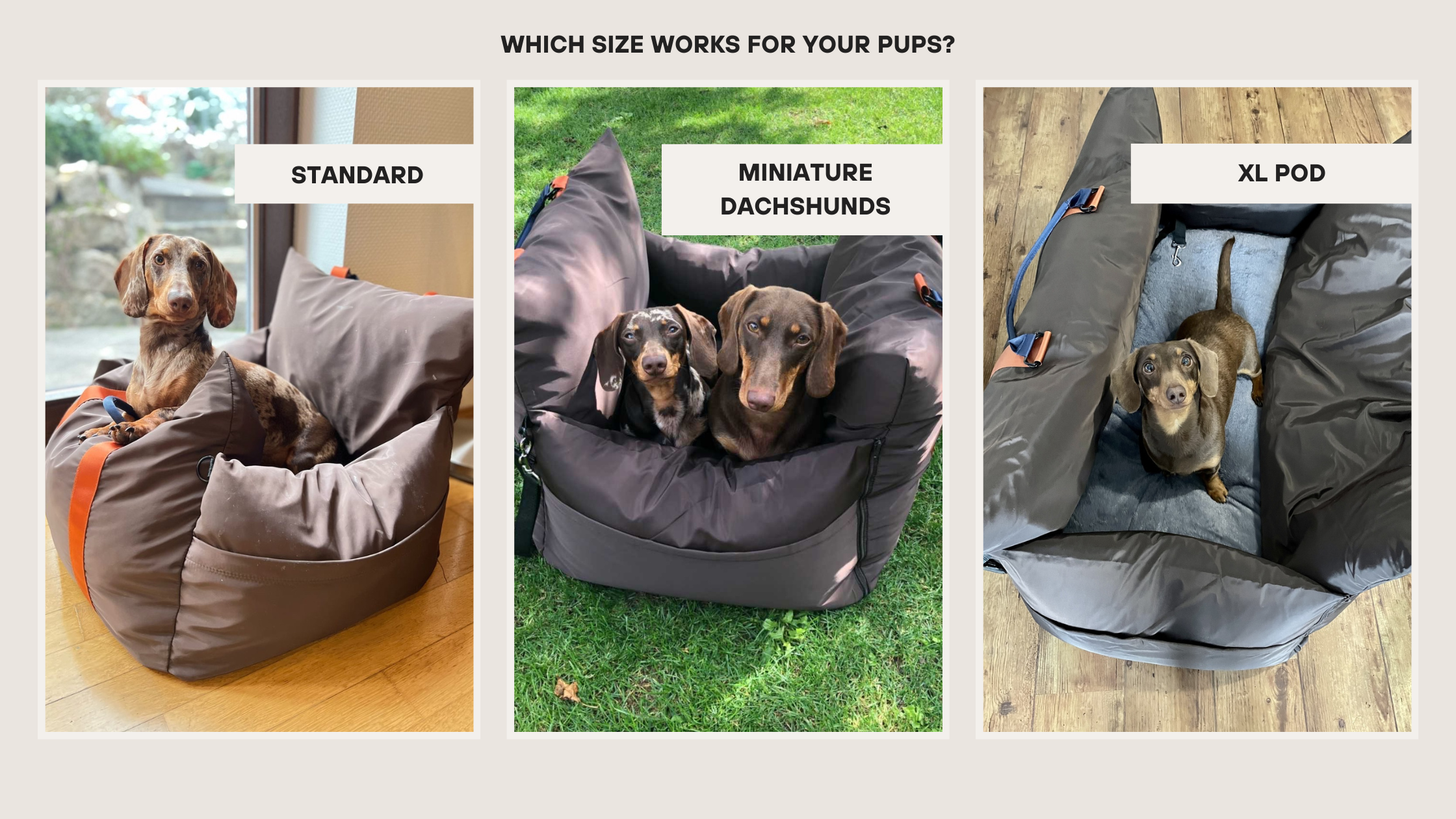
A dog car seat suits: dogs under 20kg who travel on the back seat, dogs with car anxiety (the elevation, enclosure, and stability address the root cause), dogs with motion sickness (the clear sightline reduces vestibular conflict), dogs whose owners want maximum safety with minimal daily hassle, and puppies being introduced to car travel (building positive associations from the start is easier in a purpose-built space).
For the majority of UK dog owners — particularly those with small to medium breeds who sit on the back seat — a purpose-built car seat with ISOFIX attachment offers the best combination of safety, comfort, and practicality. It's the only option that addresses crash protection, everyday physical forces, anxiety, and motion sickness in a single system.
The Honest Summary
| Harness | Crate (secured) | Dog Car Seat (ISOFIX) | |
|---|---|---|---|
| Crash protection | Minimal | Good | Excellent |
| Lateral support | None | Moderate | Excellent |
| Motion sickness | Worsens | Neutral/worsens | Reduces |
| Anxiety | Often worsens | Mixed | Reduces |
| Visibility for dog | Full | None (boot) | Full (elevated) |
| Daily convenience | Moderate | Low | High |
| Space required | Minimal | Significant | One seat |
| Legal compliance | Partial | Yes (if secured) | Yes |
No restraint is perfect. But the gap between "something in place" and "the right thing in place" is where safety — and your dog's comfort — lives.
Ready to transform car time? Discover what calm looks like →


Share:
Travelling With a Cockapoo: Car Anxiety Tips and the Best Setup